
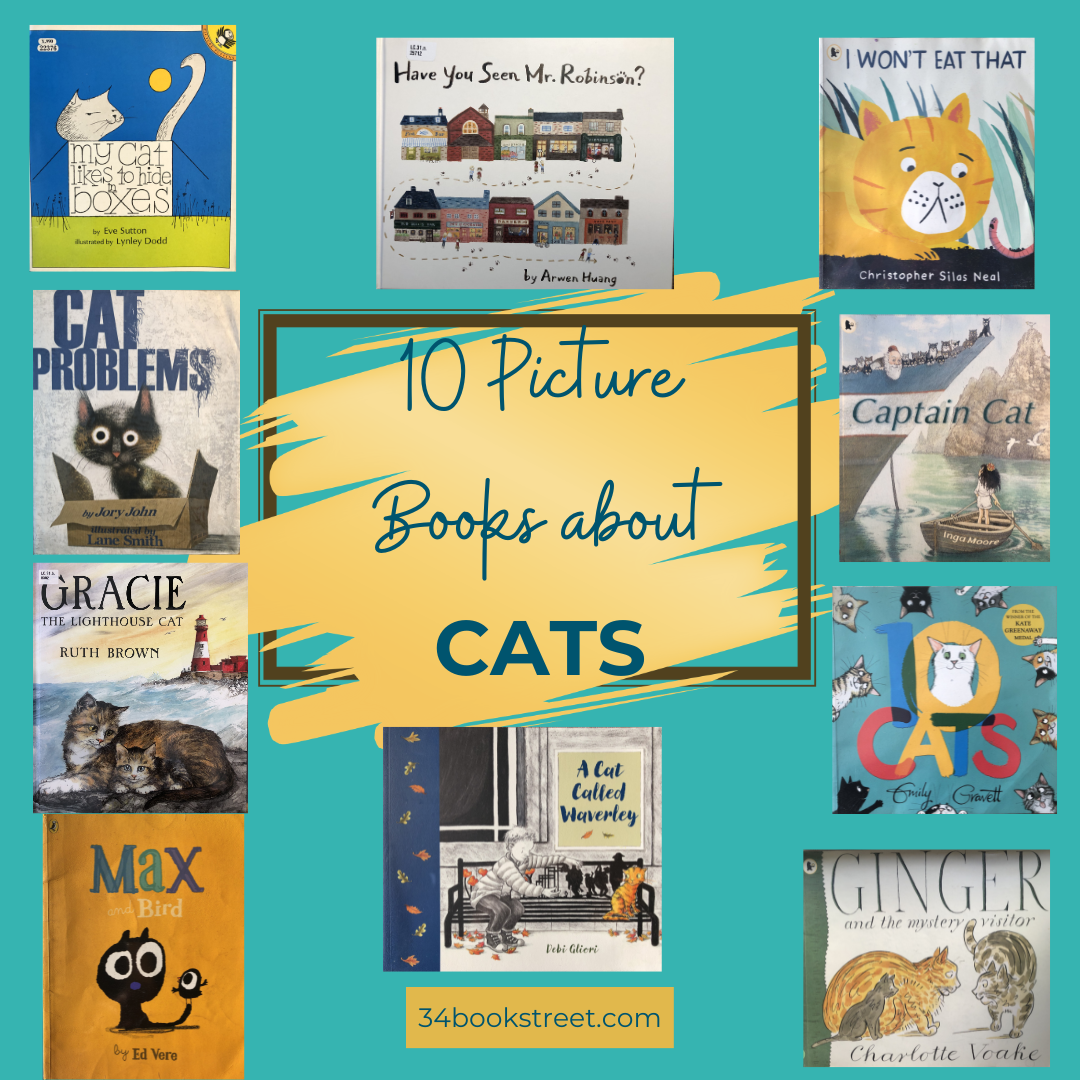
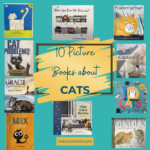
If you have a little cat lover at home or in the classroom, this roundup brings 1o charming picture books about cats, from mischievous kittens and humorous stories to adventure, friendship and gratitude.
I Won’t Eat That by Christopher Silas Neal
A simple cat story that offers repetition and creativity.
What will happen to the Cat that doesn’t eat cat’s food? She sets off to ask animals from the elephant to the tortoise about their food choices and discovers all sorts of strange snacks along the way. Finally, Cat’s curiosity sharpens when she meets the ‘right’ animal.
I Won’t Eat That, with its repeated questions and phrases, and a broad repertoire of animals, makes it an excellent choice for the EYFS library collection.
Perfect for picky eaters and curious minds alike.
Read my full review of I Won’t Eat That here.
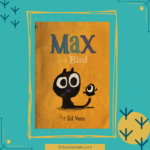
Max and Bird by Ed Vere
Max and Bird is the third book in Ed Vere’s delightful series, exploring friendship from a different perspective.
What will happen when a kitten meets a bird? The kitten is supposed to eat it. But the bird makes a deal that if Max teaches him how to fly, he might agree to be the kitten’s snack. After several funny attempts, a visit to the library and the involvement of a boastful pigeon, the bird finally took off. Surprise! Max has different views!
Ed Vere’s distinctive yet straightforward illustrations make the tale appealing to EYFS, and the story offers some ideas for the benefit of libraries and learning together.
A gentle reminder to look beyond stereotypes and celebrate the true values of friendship.
Want more details? Read the full review of Max and Bird.
A Cat Called Waverley by Debi Gliori
A marmalade-coloured cat experiences the impact of war, bringing the emotions of resilience and loss.
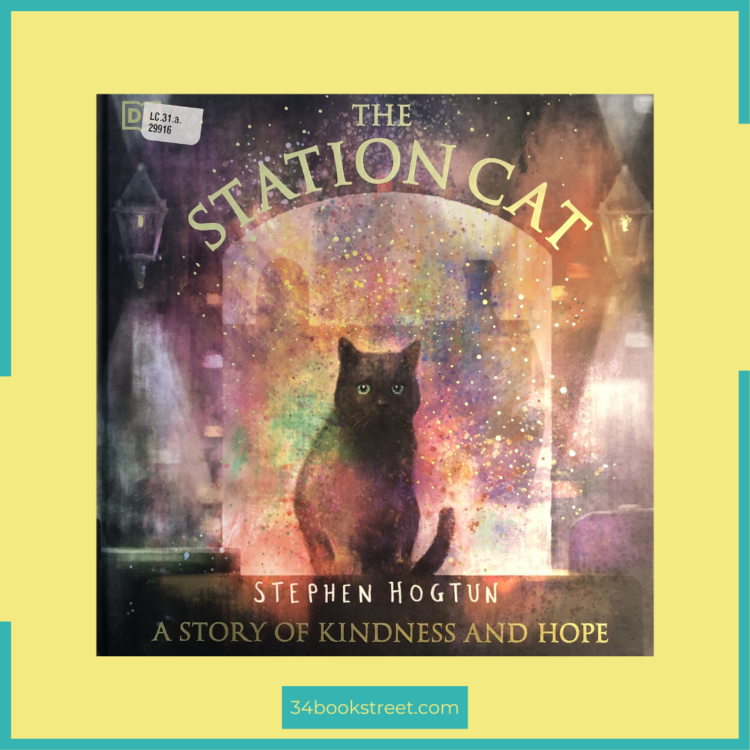
Based in Edinburgh, the story follows the happy and heartbreaking moments between the cat and her friend Donald (a real homeless war veteran). Since he left to fight in a distant land, the cat faces a hardship at home. But the hope that Donald would come back never left her, and she moved to the station to welcome him in case he returned.
A Cat Called Waverley tackles sensitive issues of war and homelessness through its beautiful illustrations, making the narrative suitable for celebrating Remembrance Day and reading aloud to children in Key Stage 1 and Lower Key Stage 2.
A touching and beautifully illustrated story about hope, loyalty, and remembrance.
I’ve written a full, detailed review of A Cat Called Waverley here.
10 Cats by Emily Gravett
10 Cats: a playful introduction to numbers and colours.
Counting has never been so chaotic or so cute! A mother cat with nine kittens is posing in the first spread. Each page introduces more cats in increasing order, describing their appearance; some are white, and others have stripes. What will happen with the red, yellow and blue paint tins around until the mother cat sleeps? The cats will turn into multicoloured cats who desperately need a bath.
Engaging and playful, suitable for preschoolers in early maths lessons, and encouraging them to see objects as a group.
Ginger and the Mystery Visitor by Charlotte Voake
Two cats, a mystery visitor, and a little girl will keep preschoolers engaged.
Ginger and the kitten are visited by another cat who behaves mischievously and eats from their food. The girl is puzzled and attaches a note to the visitor’s neck with the question: “Do I belong to anyone?” The reply reveals that Tiddles is a well-looked-after cat and doesn’t need extra food.
Ginger and the Mystery Visitor explores the love and connection between owners and pets, as well as the rivalry between cats. With its simple yet engaging story and oversized font, the tale will appeal to children in Nursery and Reception classes.
My Cat Likes to Hide in Boxes by Eve Sutton; illustrated by Lynley Dodd
My Cat Likes to Hide in Boxes compares a mischievous house cat with cats from France, Spain, Brazil, Norway and Greece. Built on strong repetition and rhyme, this classic (first published in 1973) supports phonological awareness, early vocabulary development and early geographical awareness. It is particularly well-suited to pupils in EYFS.
Have You Seen Mr Robinson by Arwen Huang
Anna is a little girl who loves books but feels anxious about being outside with the other children. Following her grandfather’s advice, a librarian, she bravely decides to go out. Anna meets a boy who is looking for Mr Robinson, the local cat, and this marks the beginning of a friendship between the two.
With its easy-to-follow storyline, the book will appeal to Nursery and Reception pupils. Have You Seen Mr Robinson opens conversations about friendship and the difficulties we sometimes face when communicating with others.
Gracie the Lighthouse Cat by Ruth Brown
Based on a true story, Gracie the Lighthouse Cat is dedicated to Grace Darling, the daughter of a lighthouse keeper. On 7 September 1838, Grace took part in the rescue of nine shipwreck survivors.
Ruth Brown uses this event as the basis for the book Gracie the Lighthouse Cat. In the story, the little kitten, awakened by the noise and the stormy weather, leaves the safety of the lighthouse and faces the wild sea. His mother, the cat Gracie, almost loses hope of finding him. But in the early hours, not only are the shipwrecked sailors saved, but the little kitten is too.
The illustrations in the book are stunning! The story would be suitable for a school display and for making cross-curricular links between English and History lessons focused on the Victorian era.
Cat Problems by Jory John and Lane Smith
Dedicated to the cats of the author and illustrator, Cat Problems focuses on the challenges of what it means to be a cat. From not having enough food, to the presence of another cat (which is more than irritating), to the boredom of staying indoors for years, the complaints pile up in this humorous picture book. Fortunately, the local squirrel, with a frank tirade, teaches the cat an important lesson in gratitude.
Cat Problems is best suited for read-aloud in KS1, where the playful use of typography can be fully appreciated while also supporting conversation about gratitude.
Captain Cat by Inga Moore
This is a book that simply must be read!
More than anything, Captain Cat loves cats and travelling to faraway places, but the other traders do not understand him because he is willing to trade his most valuable belongings for a cat. Staying true to what you love brings its own rewards, especially when the captain reaches a distant island ruled by a princess and overrun with mice.
Captain Cat is longer than a traditional picture book, which makes it suitable both for independent reading as a stepping stone towards first chapter books and for reading aloud. The story stands out for its rich humour and explores themes of love for animals, living in harmony with one’s values, and respecting one’s beliefs.




Comments
hUHXYsuvuKSpsFUScFOWids
YzuUvLJNwxiLpAqGE
rCHDssplRzDXGPsLJA
mBTnyNfaCGzsbfbAQEW
cgkdbWQPbpQbmTlYCl
kNgGjQRWHTbgelRrWsNCE
GtUQIcVpuuWrpQyhJohib
aUrXoyxInrUBdKbYKaeHg
nMcwpJawNtdiZNFbwrvX
dwVfynkQDmXpVPpObhkEFgIX